 Skip to content

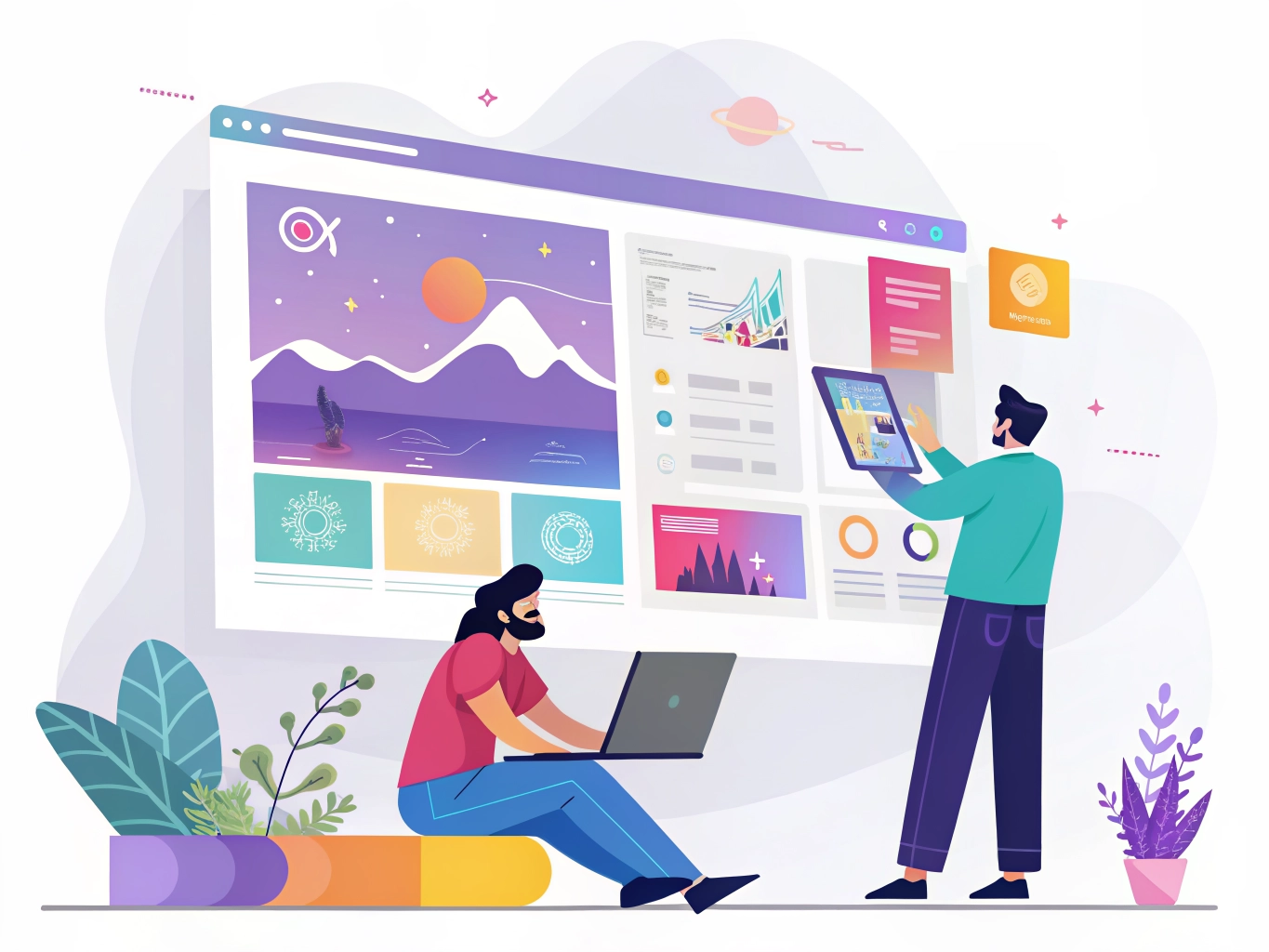
For decades, web design followed a single, golden rule: optimize for user experience (UX). We built layouts to guide human eyes, mapped navigation for human thumbs, and wrote copy to capture human hearts.
But this year, everything has changed.
The widespread adoption of AI search engines and autonomous browser agents means that a massive percentage of your website’s traffic isn’t human at all. Instead, it’s an AI agent scanning your site to answer a question, book a flight, or compare prices for its user.
If an AI agent can’t understand your site, it won’t recommend you to the human behind it. Welcome to the era of Machine Experience (MX) Design—where you have to build for two completely different audiences at once.
The Core Dilemma: Eyes vs. LLMs
Humans love visual storytelling, emotional copywriting, and clever layout transitions. Large Language Models (LLMs), however, do not care about your organic color palette or your smooth kinetic typography. They care about raw data structure, clean hierarchy, and unambiguous context.
The challenge this year is keeping your site visually breathtaking for humans while making it flawlessly machine-readable.
1. Upgrading to Semantic Markdown Architecture
In the past, poor HTML structure was a hidden sin. If a title looked big on the screen, a human didn’t care if it was coded as an <h1> or just a styled <div>.
To an AI agent, a messy codebase looks like a wall of unreadable text.
- Explicit Hierarchies: Content must be tightly wrapped in clean semantic HTML elements (
<article>,<section>,<aside>). - The Death of “Click Here”: Generic button text ruins an AI’s ability to map out a site’s utility. CTAs must be descriptive and contextualized within the code.
HTML
<!-- ✗ Bad for AI Agents -->
<div class="big-text">Our Strategy</div>
<div class="button-style" onclick="goToPage()">Learn More</div>

<!-- ✓ Optimized for 2026 MX/UX -->
<h2>Our 2026 Sustainability Strategy</h2>
<a href="/sustainability" aria-label="Read our full 2026 sustainability strategy report">Read Full Report</a>
2. The Rise of Invisible Data Layers
To prevent websites from becoming boring walls of text just to please AI engines, brands are utilizing hidden “data layer” mirrors.
- JSON-LD Schema Dominance: Websites are increasingly deploying rich, invisible schema markups in the page header. This acts as a direct “cheat sheet” for AI agents. While a human scrolls through a beautifully choreographed, interactive 3D product showcase, the AI agent instantly reads the underlying schema to grab exact dimensions, pricing, stock availability, and compatibility rules in milliseconds.
- Vector-Friendly Asset Labeling: Alt-text isn’t just an accessibility checklist anymore. It’s an AI-training layer. Detailed description tags on imagery allow visual AI search tools to accurately recommend your products or imagery in image-based discovery feeds.
3. Designing Agent-Friendly Friction Points
Autonomous browser agents are now executing real-world tasks for users, like filling out reservation forms or checking out e-commerce carts. If your checkout or signup funnel relies on overly tricky visual scripts, the agent will break, and you lose the conversion.
- Standardized Form Fields: Web forms must lean heavily on native browser autocomplete attributes (
autocomplete="email",autocomplete="tel"). - Zero-Trust Security Integration: As bots become more lifelike, traditional CAPTCHAs are being phased out for invisible, behavior-based, and biometric authentication systems that protect your platform without locking out legitimate user agents.
| Audience Type | What Captures Their Attention? | How to Deliver It |
| Human Visitors (UX) | Emotion, tactile micro-interactions, distinct aesthetics, smooth narrative scrolling. | Beautiful UI, Nature Distilled or Tactile Brutalism styling, rich media. |
| AI Web Agents (MX) | Clear data hierarchy, zero-friction forms, semantic precision, lightning-fast load times. | Structured JSON-LD schema, clean HTML5 tags, optimized backend APIs. |